
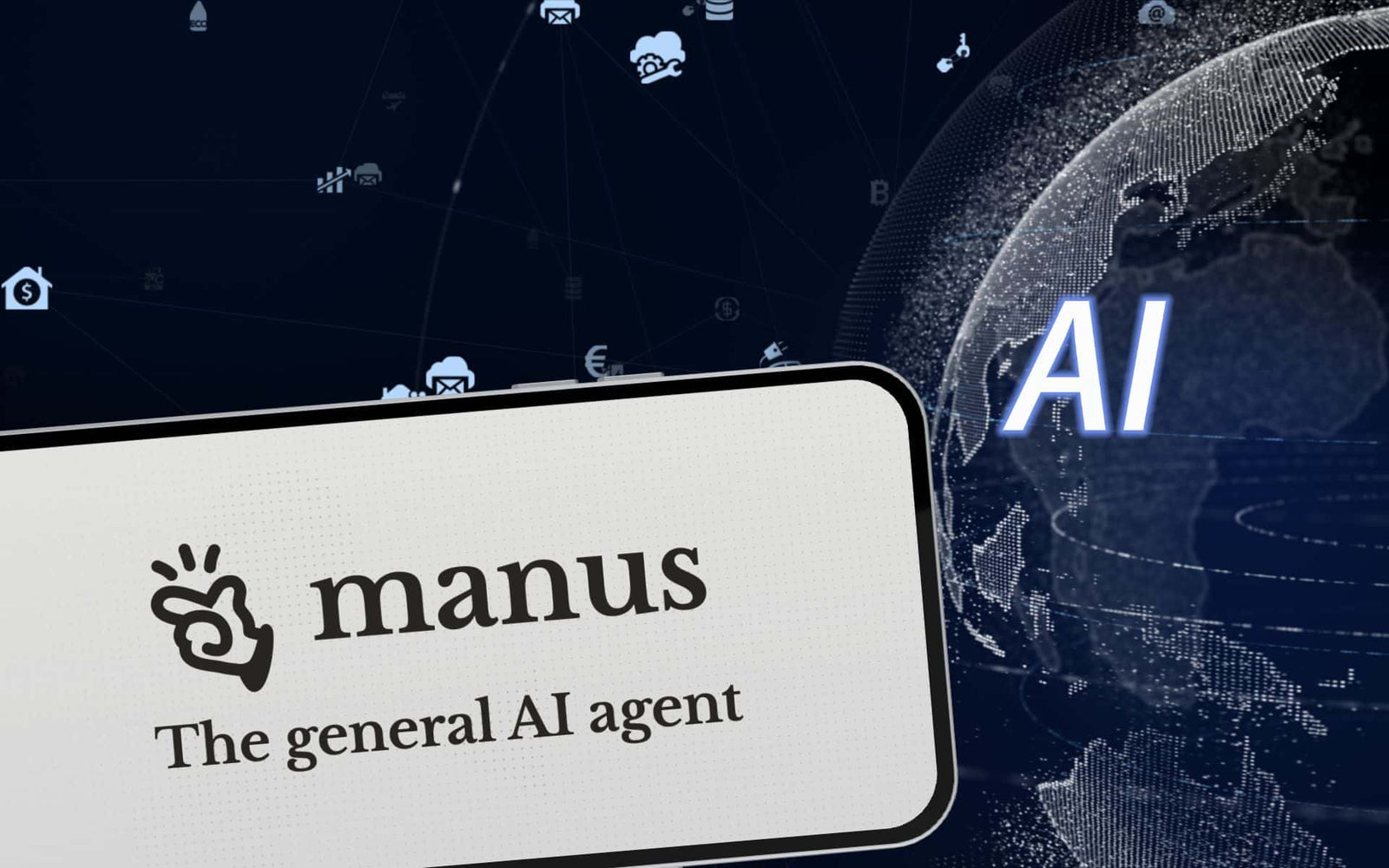
The world of artificial intelligence is experiencing a true revolution with the emergence of Manus , considered the first 100% real and fully operational agent. This innovative system, developed in China, is presented as a potential direct rival to OpenAI agents, marking a significant turning point in AI's ability to perform complex tasks.
In the tests carried out, Manus demonstrated remarkable efficiency in completing assignments that usually require several intermediate steps and chained logical decisions, something that, until now, required more intense human intervention or multiple combined tools.
The arrival of Manus is yet another reflection of the enormous growth in demand for and development of advanced artificial intelligence. Leading technology companies like Alphabet, Meta, and ByteDance have already announced ambitious plans that include the creation of massive clusters composed of up to one million AI chips each by 2027. This exponential increase in computing power highlights the growing need for intelligent agents like Manus, capable of harnessing all that technological power to perform sophisticated analyses and complex tasks.
In this context, the expansion in hardware could trigger investments of hundreds of billions of dollars in the coming years, marking an unprecedented stage in technological infrastructure. Jensen Huang, CEO of Nvidia, recently underscored the magnitude of this shift, mentioning that tech giants see the development of artificial intelligence clusters as a strategic priority for the coming years. According to Broadcom, this technological race could lead companies like Alphabet, Meta, and ByteDance to build clusters with up to one million chips each by 2027.
This is precisely where Manus has its great opportunity. As an agent specifically designed to manage complexity and execute tasks without direct intervention, it positions itself as a crucial resource for optimizing these new technological resources. This system promises not only to improve productivity but also to significantly reduce operating times and costs, freeing people from repetitive tasks and allowing them to focus on more strategic and creative activities.
The arrival of Manus highlights that competition in artificial intelligence is no longer exclusive to the West. China is demonstrating the capability and ambition to compete directly in this field, offering innovative solutions that could be game-changers in the coming years. Manus is just the beginning of this new era of intelligent agents, which promises to profoundly redefine how we understand automation and human-technology interaction.
The following video explains much better than words what can be done.