
These days, it's common to encounter shocking messages on WhatsApp or surprising posts on Facebook or TikTok. However, it's essential to question the veracity of what we see or read. In this article, we'll address fake news, deepfakes, and disinformation—three forms of deception in the digital world. We'll explain how they work, their motivations, and their consequences. Most importantly, we'll give you tips on how to detect these lies and protect yourself from their harmful effects.
Fake news: news that isn't news
They are presented as truthful information, but in reality, they are deceptions or distortions. Their purpose is to confuse you, influence your opinion, or grab your attention. These news stories may have political, economic, or ideological motivations, or they may simply seek to generate sensationalism.
Fake news spreads through various channels, including newspapers, radio, television, the internet, and social media. Some are easily detectable due to errors or contradictions, while others are more insidious, using real data and images taken out of context or manipulated.
Fake news is dangerous because it can make you believe falsehoods that go against your interests, such as distrusting safe vaccines, affecting the outcome of elections, or prompting you to buy useless products.
Deepfakes: videos that are not videos
Manipulating reality in videos: Deepfakes are videos or audio recordings altered using artificial intelligence to replace a person's face or voice with that of another. The result is so realistic that it seems as if the person said or did something they never actually did.
While deepfakes can be used for humorous or artistic purposes, they can also be malicious, generating fake news, defaming, or impersonating people.
These manipulated videos can be dangerous, showing you fictitious or harmful situations for the people involved, such as compromising the privacy of a famous actor, provoking diplomatic crises, or defaming ordinary people. 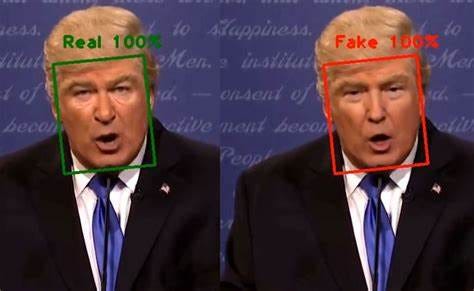
Taken from: What Are Deepfakes and How Do They Affect You? (thegadgetflow.com)
Disinformation: the art of lying with information
Disinformation encompasses the creation, dissemination, or consumption of false or manipulated information, whether intentionally or due to a lack of verification. Its aim can be to persuade, disorient, or polarize you.
This type of misinformation can affect areas such as health, science, the economy, politics, or culture, damaging the credibility of institutions, fostering hatred or discrimination, and hindering democratic processes or the solution of global problems.
Artificial intelligence: a double-edged sword
AI plays a key role in the creation, dissemination, and detection of fake news and deepfakes. On the one hand, AI facilitates the generation of false or manipulated content, with ever-increasing quality and speed. On the other hand, AI also enables the spread of this content through social media, algorithms, and bots (programs that simulate real users). But, on the other hand, AI can also help combat these phenomena through tools that allow us to verify, analyze, or debunk information.

The famous image of Pope Francis wearing a Balenciaga jacket that went viral around the world at the time.
How to defend yourself against digital lies: practical tips
Given this situation, it's essential that you adopt a critical and responsible approach to the information you receive and share. To do this, you can follow some tips, such as:
- Check the source: Who is the author? How credible are they? What are their interests?
- Compare the information: Are there other sources that confirm or deny it? What do experts or institutions say about it?
- Analyze the content: What type of language is used? Are there data, figures, or evidence to support it? Are there any spelling or grammatical errors?
- Observe the format: Are there any signs of manipulation or alteration in the images or videos? Are there any elements that don't fit or that seem strange?
- Reflect on the purpose: What is the objective of the message? What effect does it seek to generate in you? What benefit does the sender obtain?
- Consult reliable sources: Are there any media outlets, official bodies, or fact-checking platforms that have covered the topic?
- Don't spread dubious information: Are you sure that what you're going to share is true and relevant? Could it harm someone or cause any damage?
With these tips, you can better protect yourself from digital lies and be an informed and conscious consumer in the information age.
Brain and Code ©
June 2023
2 comments
Goood day! This post coud not be written any better! Reaqding through this post reminds me of myy old room mate!
He always kept chatting about this. I will forward
this article to him. Pretty sure he will have a good read.
Thqnks for sharing! https://Evolution.org.ua/
Wow, incredible weblog format! How lengthy have you been running a blog
for? you make blogging look easy. The overall look of your site is
wonderful, let alone the content! You can see
similar here najlepszy sklep