
In the era of digital transformation, the concept of " digital twin " emerges as a fundamental tool to optimize processes, predict failures and revolutionize various sectors.
What is a digital twin?
A digital twin is an exact virtual representation of a physical object, enriched with real-time data from sensors and other sources. It functions as a digital mirror , reflecting the state, behavior, and environment of the real object.
How does a digital twin work?
- Data collection: Sensors are installed on the physical object to collect data about its operation, environment, and conditions .
- Creation of the virtual model: A 3D digital representation of the physical object is created, incorporating the collected data.
- Simulation and analysis: Simulations are performed on the digital twin to study the behavior of the physical object in different scenarios.
- Decision-making: The results of the simulations provide valuable information for optimizing performance , predicting failures , and making strategic decisions .
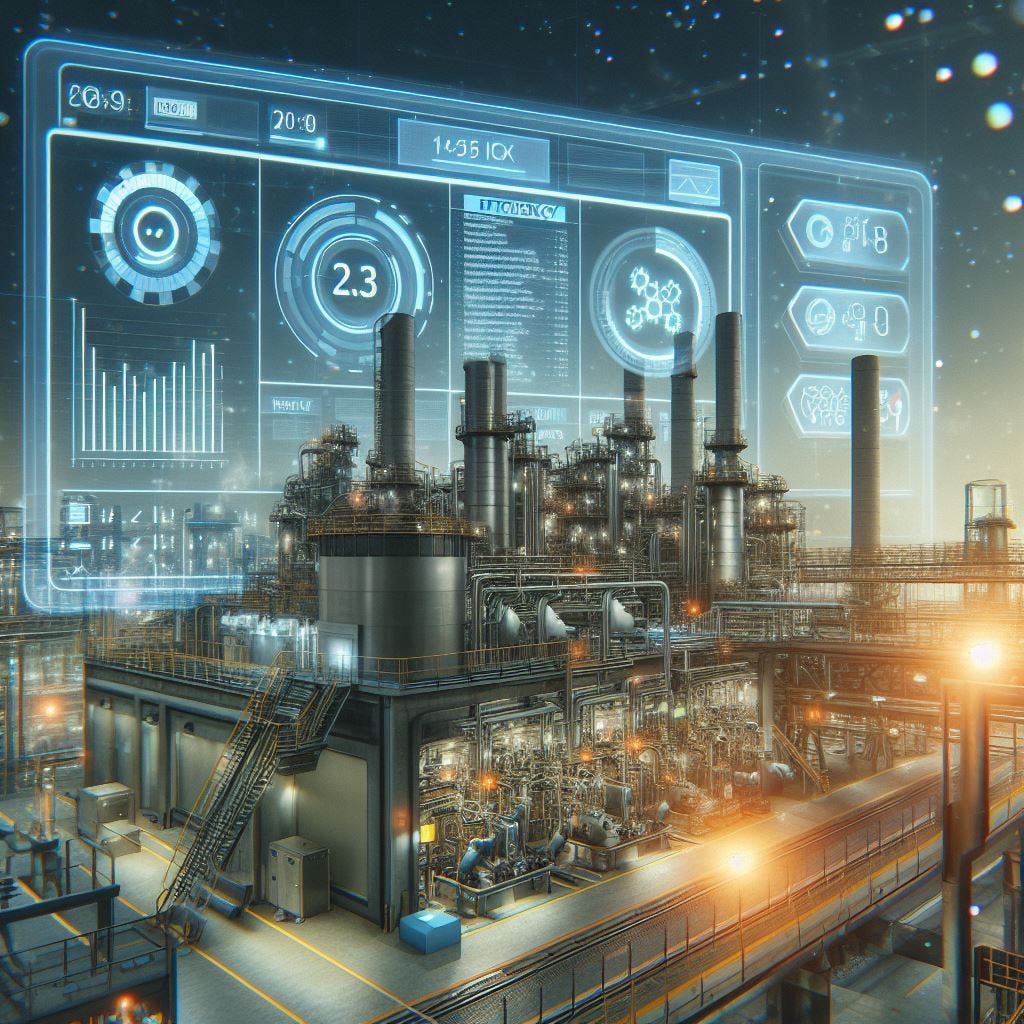
Image generated using AI on Bing.com/create
In which sectors are Digital Twins used?
- Manufacturing: Optimization of production processes, reduction of downtime and improvement of product quality.
- Construction: Efficient building design, urban planning, and project impact simulation.
- Energy: Optimization of energy consumption, management of electrical networks and prediction of failures in wind turbines.
- Health: Development of personalized medicines, planning of complex surgeries, and simulation of organ function.
- Transportation: Optimization of transport routes, traffic management and accident simulation.
Benefits of digital twins:
- Improved efficiency: Process optimization, reduced downtime, and increased productivity.
- Failure prediction: Early detection of potential problems and prevention of costly operational downtime.
- Intelligent decision making: Based on real-time data and accurate simulations.
- Cost reduction: Resource optimization, waste reduction, and reduced operating expenses.
- Innovation: Development of new products, services and business models.
Integrating generative AI into digital twins opens up an even wider range of possibilities. AI can generate synthetic data , create hypothetical scenarios , and personalize simulations , further enhancing the value of this technology.
Examples of the use of digital twins and generative AI:
- Smart city development: Simulation of the impact of public policies on traffic, pollution and quality of life.
- Custom product design: Creation of digital twins of products to customize them according to the needs of each user.
- Professional training: Simulation of complex scenarios to train doctors, pilots, and other professionals.
We can conclude that digital twins, in combination with generative AI, represent a revolution in how we interact with the physical world . Their potential to optimize processes, predict failures, and generate valuable information is immense, opening up countless possibilities for diverse sectors and industries.
Do you want to be part of the Generative Artificial Intelligence Revolution? Would you like to learn about its many uses and tools? Discover our certified course and become a true professional.